
UK Casino Rules 2026: What Changes Mean for 21 Casino Players
 Available in GB
For a 21 Casino player in Great Britain, the most important recent rule changes are already practical rather than theoretical. Online slots are capped at £5 per game cycle for players aged 25 or over and £2 for players aged 18 to 24. Since 19 January 2026, gambling incentives cannot carry wagering requirements above 10x the bonus funds and cannot mix more than one gambling product type in the same incentive. Light-touch financial vulnerability checks apply when net deposits exceed £150 over a rolling 30-day period.
As of 5 September 2026, one further change is still future-dated. The UK Gambling Commission says revised RTS 12B financial-limit rules take effect on 30 September 2026. They will require gross deposit limits to be offered and will tighten how deposit and other financial limits are named and applied. The Great Britain scope here means England, Scotland and Wales rather than identical gambling law across Northern Ireland.
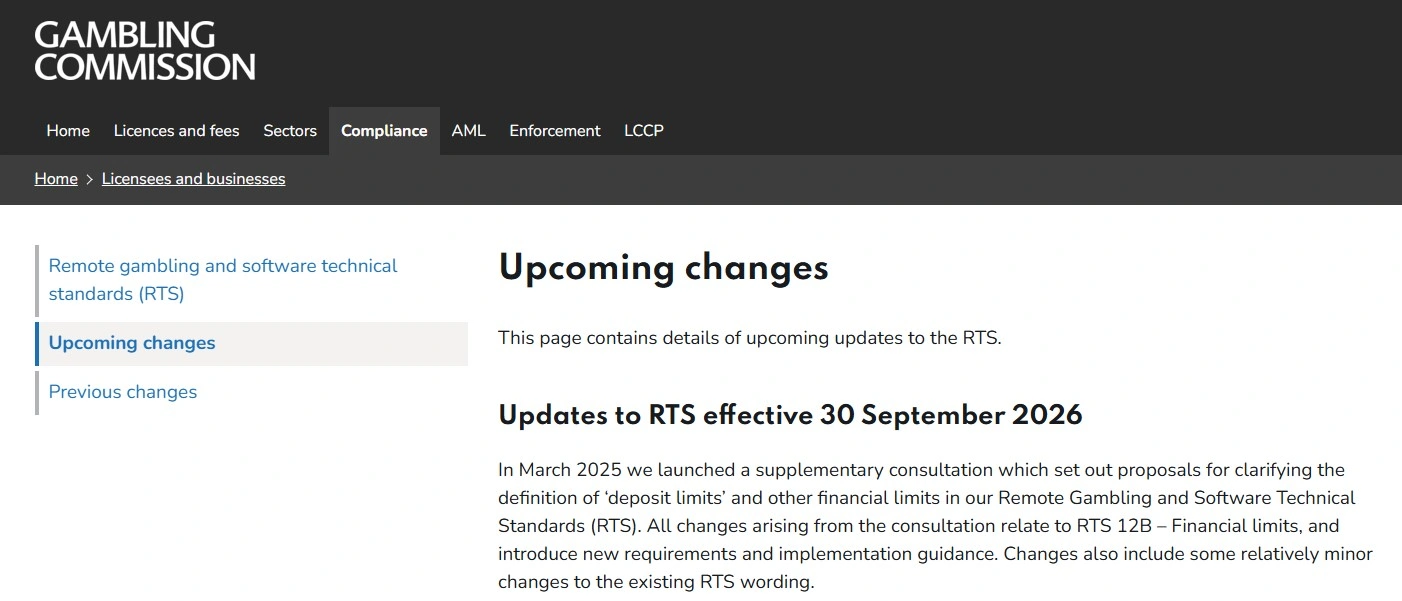
Table of Contents
- 2025-2026 rule timeline for Great Britain players
- Online slot stakes: £5 for 25+, £2 for ages 18-24
- Bonus rules: 10x is a ceiling, not a promise of 10x
- The £150 check is a financial vulnerability check, not ordinary KYC
- 30 September 2026: what RTS 12B is scheduled to change
- Credit cards are still outside the Great Britain casino funding route
- Great Britain does not mean identical rules across Northern Ireland
- Responsible gambling and self-exclusion remain part of the framework
- A short tax note for ordinary players
- What these rules mean in practice
- Frequently asked questions
2025-2026 rule timeline for Great Britain players
| Date | Rule | Practical 21 Casino touchpoint |
|---|---|---|
| 28 February 2025 | Light-touch financial vulnerability threshold reduced to £150 net deposits in a rolling 30-day period. | Account activity can trigger a public-record vulnerability check even when ordinary identity verification is already complete. |
| 9 April 2025 | £5 maximum stake per game cycle for online slots for players aged 25 and over. | The slot interface cannot lawfully accept a stake above that ceiling for this age group in Great Britain. |
| 21 May 2025 | £2 maximum stake per game cycle for online slots for players aged 18 to 24. | Younger adults see a lower statutory cap on online slots. |
| 19 January 2026 | Incentive wagering requirements capped at 10x bonus funds and mixed-product incentives prohibited. | Bonus structures have a regulatory ceiling, but the exact terms of any specific 21 Casino offer still need to be read separately. |
| 30 September 2026 | Revised RTS 12B financial-limit rules take effect. | Gross deposit limits must be offered and the terminology around deposit, stake, loss and net deposit limits becomes more standardised. |
Several rules affecting players came into force during 2025. Check the Gambling Commission page for current and scheduled rule changes, as dates and requirements can change.
Online slot stakes: £5 for 25+, £2 for ages 18-24
The UK Gambling Commission’s online slots stake-limit guidance says the maximum stake per game cycle is £5 for customers aged 25 and over and £2 for customers aged 18 to 24. The £5 limit went live on 9 April 2025, while the £2 limit for younger adults went live on 21 May 2025.
This is a rule about online slots. The Commission expressly distinguishes slots from other casino games such as roulette and blackjack. That matters when reading the slot limits and games: a player should not look at the £5 or £2 slot cap and assume it is a universal stake ceiling for every casino product.
The phrase “per game cycle” is also important. It is not simply a daily or session budget. It limits how much can be staked in the individual online-slot game cycle defined by the regulation. A casino may offer lower limits or additional account controls, but it cannot use a higher slot stake merely because a customer is comfortable with the amount.
Bonus rules: 10x is a ceiling, not a promise of 10x
From 19 January 2026, the Gambling Commission’s rewards and bonuses rules prohibit wagering requirements above 10x the bonus funds attached to an incentive. The same rules also prohibit an incentive from combining more than one gambling product type, such as casino and betting, within the same incentive. The current regulator wording is set out in its Social Responsibility Code 5.1.1 guidance.
For a 21 Casino player, 10x is the maximum regulatory ceiling for a qualifying incentive, not a statement that a particular promotion uses exactly 10x. An offer can use a lower requirement or a different qualifying structure. Brand-specific promotion terms are covered in the bonus rules section.
The mixed-product restriction is similarly structural. A promotion cannot bundle different gambling product categories into the same incentive under the Great Britain rule. That improves comparability because the customer should be able to understand which product the incentive belongs to without a casino-plus-betting crossover condition hidden inside one reward.
The £150 check is a financial vulnerability check, not ordinary KYC
The current LCCP financial vulnerability rule requires remote licensees to undertake a light-touch check when a customer’s deposits minus withdrawals exceed £150 in a rolling 30-day period. The Commission describes the minimum check as a customer-specific review of public-record indicators such as bankruptcy orders and specified forms of debt judgment or arrangement. Its current LCCP Condition 3.4.4 gives the operative threshold and process.
This should not be confused with identity verification. The account checks covers the separate process of creating and verifying an account. A player can have completed name, age, identity or address checks and still meet the financial vulnerability threshold later through account funding activity.
The Commission also distinguishes these light-touch vulnerability checks from financial risk assessments. That terminology matters. Calling every £150 trigger an “affordability check” or assuming it automatically means a detailed review of salary and bank statements overstates what the regulation says. The rule begins with public-record vulnerability information, while the operator must assess any risk signal alongside other information it is permitted to use and take proportionate action where risk is identified.
30 September 2026: what RTS 12B is scheduled to change
As of 5 September 2026, the Gambling Commission still labels the revised RTS 12B provisions as upcoming and gives an effective date of 30 September 2026. Its RTS upcoming changes page says the new requirements will clarify what can be called a deposit limit and require gambling systems to offer gross deposit limits as a minimum.
Under the published wording, a gross deposit limit is a limit on how much a customer deposits into the account over a defined duration. If more than one type of financial limit is offered, gross deposit limits must receive at least equal prominence. Once a deposit limit is reached, further depositing must be blocked until the defined period restarts or the customer increases the limit subject to the standard 24-hour cooling-off period. Where simultaneous time frames exist, the most restrictive one must apply.
The guidance also changes some terminology. “Spend limits” becomes “stake limits”, the definition of a loss limit is clarified, and a separate concept of a net deposit limit is recognised as deposits minus withdrawals over the relevant period. These changes are about how financial controls are presented and applied, not about banning deposits after a universal government-set amount.
For a 21 Casino player, the change will be most visible in the cashier and account-controls area. The payment rules section covers casino funding, while RTS 12B concerns customer-set financial limits.
Credit cards are still outside the Great Britain casino funding route
The 2025-2026 changes sit on top of older rules that still matter in a 2026 cashier. The Gambling Commission’s credit-card guidance says operators in online betting, casino and bingo must not accept credit card payments for gambling in Great Britain. Operators must also make sure that an accepted e-wallet is not being used as a workaround when its funds came from a credit card.
This is why a list of possible payment brands should never be read as permission to fund gambling with a credit card indirectly. The regulatory rule applies to the source of the gambling funds, not just the logo shown at checkout.
Great Britain does not mean identical rules across Northern Ireland
UK gambling articles often use “UK” casually, but the legal scope needs more care. The UK Gambling Commission’s Gambling Act 2005 remit is Great Britain – England, Scotland and Wales. Northern Ireland has its own gambling-law framework. The Northern Ireland Department for Communities states that gambling there is regulated under the Betting, Gaming, Lotteries and Amusements (Northern Ireland) Order 1985 as amended by the 2022 Act, with wider online-gambling reform treated as a separate policy track.
The £5/£2 slot caps, bonus rules, £150 vulnerability threshold and RTS 12B requirements described here are Great Britain rules. They should not be assumed to have identical statutory scope in Northern Ireland. The UKGC licence section covers the Great Britain operator record.
Responsible gambling and self-exclusion remain part of the framework
The Commission’s current self-exclusion guidance says gambling businesses must have their own self-exclusion arrangements and that GAMSTOP ONLINE allows a person to self-exclude from online operators with one request. Self-exclusion is designed for someone who has recognised that gambling is harmful and wants support to stop.
Financial limits and vulnerability checks should not be mistaken for a guarantee that gambling will stay affordable. They are controls and regulatory interventions, not a way to calculate a safe gambling budget for an individual. If gambling is causing harm, self-exclusion and specialist support are more relevant than trying to optimise bonus value or stake size.
A short tax note for ordinary players
HMRC’s current Business Income Manual says the miscellaneous-income provisions do not tax gambling winnings from wagers and bets. For an ordinary player, that supports the general statement that gambling winnings are not taxed as miscellaneous income. It should not be stretched into personal tax advice for unusual arrangements, business activity or other sources of income.
The ordinary-player tax note is limited to general UK gambling-winnings context. Anyone with unusual tax circumstances should use HMRC guidance or professional tax advice rather than treating casino information as personal tax advice.
What these rules mean in practice
- If you play online slots, your age determines whether the statutory Great Britain stake ceiling is £5 or £2 per game cycle.
- If you consider a casino incentive, treat 10x as the maximum permitted wagering requirement on bonus funds, not as the automatically applicable 21 Casino term.
- If your net deposits exceed £150 over a rolling 30-day period, a light-touch financial vulnerability check can be triggered separately from normal KYC.
- Until 30 September 2026, the revised RTS 12B rules remain scheduled. From that date, they become part of the applicable remote technical standards according to the published timetable.
- Do not use a credit card, including through an e-wallet workaround, to fund online casino gambling with a Great Britain licensed operator.
- Keep the Great Britain and Northern Ireland legal frameworks separate when interpreting a rule described as “UK casino regulation”.
Taken together, the 2026 changes affect slot stakes, incentive design, financial-vulnerability screening and customer-set financial limits. Players still need to consider the promotion, cashier and account controls that apply to their own 21 Casino account.
The broader 21 Casino brings this topic together with the casino’s other main account and product areas.
Frequently asked questions
Is 10x the wagering requirement at 21 Casino?
Not necessarily. The Great Britain rule says an incentive wagering requirement cannot exceed 10x the bonus funds. It does not prove that a specific 21 Casino offer uses exactly 10x. Check the current offer terms for the actual multiplier and qualifying conditions.
Do the £5 and £2 limits apply to live roulette or blackjack?
No. The Gambling Commission’s stake-limit guidance says the statutory caps described here apply to online slots and do not apply to other casino games such as roulette or blackjack.
Does depositing £150 mean my account is automatically blocked?
No. The rule sets a threshold for a light-touch financial vulnerability check based on net deposits in a rolling 30-day period. The operator considers the public-record information and any relevant risk signal, then takes proportionate action where risk is identified.
Are the new deposit-limit rules already in force?
As of 5 September 2026, the new RTS 12B elements are scheduled to take effect on 30 September 2026.
Written by the editors at 21 Casino Casino.